
A cat collar should be easy to forget about – for both you and your furry friend. If it twists, slides over the head, catches under the jaw, or leaves a mark, it needs attention. Learning how to fit cat collars properly takes only a minute, but it can make everyday wear safer, more comfortable, and far less frustrating for your cat.
Why a Properly Fitted Cat Collar Matters
A collar can hold an ID tag, add visibility, or simply show off your cat’s personality. But the wrong fit can create problems. A collar that is too tight may rub the skin, flatten fur, or make swallowing uncomfortable. One that is too loose can snag on furniture, slip off during an outdoor adventure, or get caught around your cat’s mouth or leg while grooming.
For most cats, a lightweight breakaway collar is the practical everyday choice. Its safety clasp is designed to release if the collar gets stuck, which is especially helpful for cats that go outside, climb, or squeeze into favorite hiding spots. The trade-off is that a breakaway collar can come off and get lost. Keep your cat microchipped and make sure their ID tag is current, so one missing collar does not become a major worry.
How to Fit a Cat Collar in Four Simple Steps
1. Start with the right collar size
Before adjusting anything, choose a collar made for cats rather than a small dog collar. Cat collars are generally lighter, narrower, and designed with a breakaway release. Measure around the base of your cat’s neck with a soft measuring tape, leaving no tension in the tape. If you do not have one, use a piece of string, then measure the string against a ruler.
Most adjustable collars display a neck-size range. Choose a range that includes your cat’s measurement near the middle rather than at the tightest or loosest setting. This gives you room to make small changes if your cat gains weight, grows, or has especially thick seasonal fur.
2. Adjust it while your cat is calm
Try fitting the collar after a meal, a play session, or a cozy nap, when your cat is more likely to tolerate handling. Open the collar fully, place it gently around the neck, and fasten it according to the closure instructions. Keep the tag, bell, or decorative piece under the chin or slightly to one side, where it is less likely to press against the throat.
If your cat is new to collars, do not expect an instant perfect reaction. A little scratching, head shaking, or walking backward can be normal during the first few minutes. Panicked behavior, repeated rolling, or relentless attempts to bite off the collar are signs to take it off, offer a break, and introduce it again later for a shorter session.
3. Use the two-finger comfort check
The easiest answer to how tight a cat collar should be is the two-finger rule. You should be able to slide two flat fingers between the collar and your cat’s neck. Your fingers should fit without force, but there should not be a large gap that lets the collar droop or spin freely.
For very small kittens or petite adult cats, use your judgment. Two stacked fingers may create too much room, while one flat finger can be a better guide. The goal is consistent: the collar should sit comfortably against the neck without pinching, yet stay secure enough that your cat cannot back out of it.
4. Check the fit in motion
A collar can feel fine while your cat is sitting still and fit poorly once they start moving. Watch your cat walk, stretch, eat, groom, and jump after fitting it. The collar should not interfere with the shoulder movement or ride up toward the jaw.
Run a quick visual check as well. The collar should not be loose enough for a paw to slide through. If you see your cat repeatedly hook a paw beneath it, adjust the fit immediately. With a breakaway design, test the clasp gently according to its instructions. It should stay closed through normal movement but release when snagged with a firm pull.
Choosing Features That Work for Your Cat
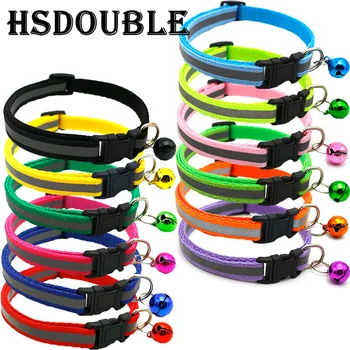
The best collar is not always the fanciest one. A soft nylon or smooth fabric collar is often easy to clean and comfortable for daily use. Reflective stitching can be useful for visibility at dawn or dusk, while a small ID tag helps someone contact you quickly if your cat wanders away.
Bells are a personal choice. Some pet parents like the gentle sound because it can help track a cat around the house and alert birds or small wildlife outdoors. Other cats dislike the noise, and some owners prefer a quiet collar for a calmer home. If your cat seems bothered by a bell or a large dangling tag, remove it and choose a lighter option.
Avoid heavy charms, oversized decorations, or anything with sharp edges. Cute details should never outweigh comfort. At Global Paw Store, practical everyday accessories are all about making pet care easier, so look for lightweight designs that match your cat’s routine rather than asking them to adapt to an uncomfortable accessory.
Special Fitting Tips for Kittens and Long-Haired Cats
Kittens grow quickly, which means a collar that fit last month may be too tight now. Check a kitten’s collar at least once a week, especially during the first year. You may need to loosen it more often than expected. Never buy an oversized collar for a kitten with the plan that they will grow into it. A too-loose collar presents its own safety risk right now.
Long-haired cats need regular checks too. Thick fur can make a collar seem snug when it is actually loose against the skin, or it can hide rubbing that is developing underneath. Part the fur along the collar line every few days to look for redness, thinning fur, flakes, or dampness. Take the collar off for grooming if mats begin forming around the neck area.
Senior cats and cats with skin sensitivities may do best with an especially soft, simple collar. If your cat has a wound, rash, recent surgery, trouble breathing, or noticeable neck swelling, skip the collar and ask your veterinarian for guidance before putting it back on.
Signs Your Cat’s Collar Needs Adjustment
Do not treat collar fitting as a one-time task. Check it whenever you notice changes in your cat’s body condition, behavior, or coat. A fast monthly check works well for most adult cats, and it takes less time than filling a food bowl.
Loosen or remove the collar if it leaves an indentation, rubs away fur, causes redness, or seems difficult to slide your fingers beneath. Tightness can change after weight gain, and collars can shrink slightly after getting wet or being washed.
Tighten the collar if it hangs low on the chest, turns around the neck constantly, slips over the head, or lets a paw get through. Replace it if the fabric is frayed, the buckle is cracked, the breakaway clasp no longer closes reliably, or the tag ring is pulling apart. Affordable collars make it easy to keep a fresh backup on hand, which is useful when one is being cleaned or has gone missing.
A Collar Is for ID, Not Leash Walking
Even a perfectly fitted cat collar should not be used as the attachment point for a leash. Cats can twist, bolt, and pull with surprising force, and pressure on the neck can lead to injury or a broken clasp. For supervised walks, travel stops, or outdoor training, use a properly fitted cat harness with a leash attachment instead.
A collar’s job is simple: it should sit comfortably, carry identification if needed, and release when it must. Once your cat can move, nap, and groom without noticing it, you have found the fit that lets their personality shine while keeping everyday safety close at hand.



0 Comments